Is Quantum Computing Overhyped? A Realistic Look
By Alex Chen | Published September 20, 2023 | Last updated: November 15, 2023
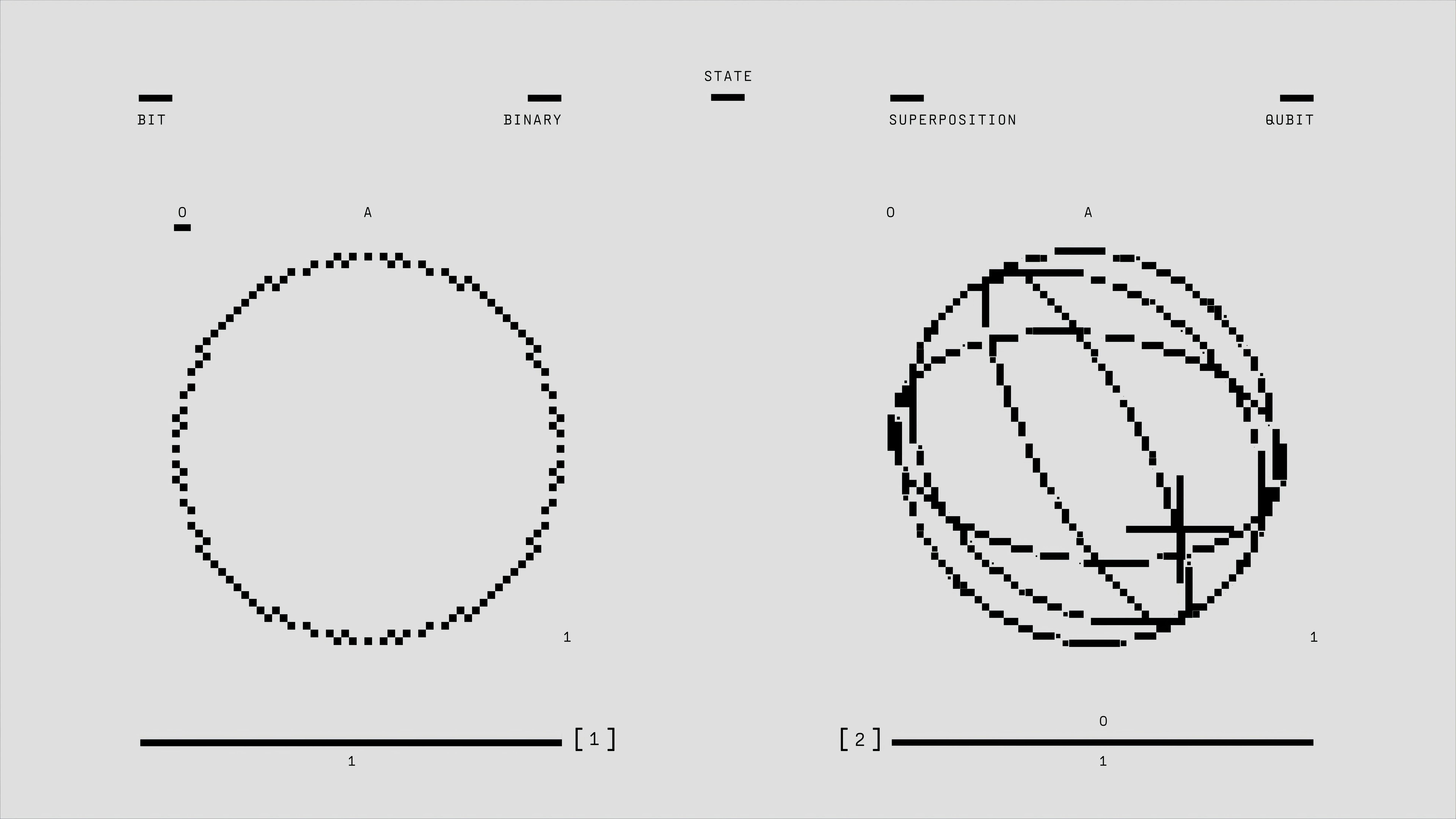
Quantum computing is often portrayed as a technology that will change everything overnight, from breaking all encryption to creating god-like AI. While its long-term potential is immense, the current reality is far more nuanced. It's crucial to understand what quantum computers can and cannot do today, and what the roadmap looks like for this truly revolutionary field. Let's separate the hype from the facts and take a realistic look at the quantum landscape.
Advertisement
Unlock the secrets of tomorrow. Discover cutting-edge tech insights with TechSphere Premium!
The Core Principles: Beyond Bits and Bytes
Final Step: Unlock Your Link
Click below for the final verification. Your destination link will be ready immediately after.
Unlike classical computers that use bits representing 0 or 1, quantum computers leverage **qubits**. Qubits can exist in a superposition of both 0 and 1 simultaneously, and can also be entangled with other qubits. These unique quantum phenomena allow quantum computers to process vast amounts of information in ways classical computers simply cannot.
- Superposition: A qubit can be 0, 1, or a combination of both until measured.
- Entanglement: Two or more qubits can become linked, so the state of one instantly influences the state of the others, regardless of distance.
- Quantum Tunneling: Particles can pass through energy barriers that classical physics would deem impenetrable, a concept crucial for certain quantum algorithms.
What Quantum Computers Are Good At (The "Quantum Advantage")
Quantum computers are not simply faster versions of classical computers. They operate on the principles of quantum mechanics to solve a very specific class of problems that are computationally intractable for even the most powerful supercomputers. These include:
1. Complex Simulation: Materials Science & Drug Discovery
Simulating molecules and materials at the quantum level is a profound application. This could revolutionize drug discovery by accurately modeling protein folding or chemical reactions, and dramatically accelerate the development of new materials with unprecedented properties (e.g., superconductors, more efficient batteries). Currently, classical computers can only simulate very small molecules with high accuracy.
2. Advanced Optimization Problems
Solving complex optimization problems, such as logistics, financial modeling, and network optimization, far more efficiently than classical machines. Imagine optimizing global shipping routes in real-time or finding the most efficient portfolio for investments considering thousands of variables. Quantum annealing, a type of quantum computing, is particularly suited for these tasks.
3. Machine Learning & AI Enhancement
While still nascent, quantum machine learning algorithms show promise for enhancing AI. They could potentially process much larger datasets, discover hidden patterns faster, and improve complex models, leading to breakthroughs in areas like image recognition, natural language processing, and advanced data analytics.
Special Offer!
Protect your data today. Get 50% off on our top-rated Cybersecurity Toolkit!
What They Are NOT Good At (Yet) - The Hurdles
A quantum computer will not replace your laptop for everyday tasks. They are terrible at things classical computers excel at, like browsing the internet, sending emails, or running a spreadsheet. Furthermore, today's quantum computers are extremely sensitive to environmental "noise" (like temperature fluctuations, vibrations, electromagnetic fields), which corrupts their calculations. This leads to what's known as "decoherence," where the delicate quantum states collapse.
1. Error Correction: The Grand Challenge
Building "fault-tolerant" quantum computers with enough stable, high-fidelity qubits to solve large-scale problems is the grand challenge. Current machines are "Noisy Intermediate-Scale Quantum" (NISQ) devices, meaning they have a limited number of qubits and are prone to errors. Developing robust quantum error correction mechanisms is crucial and is likely still a decade or more away for practical, large-scale applications.
2. Specialized Algorithms Required
Quantum computers don't magically solve all problems. They require specific quantum algorithms (like Shor's algorithm for factoring or Grover's algorithm for searching unstructured databases) to harness their power. Developing new, effective quantum algorithms is an active area of research.
The Encryption Threat: Real but Distant (Post-Quantum Cryptography)
The biggest concern is that a powerful quantum computer could break most of the public-key encryption (like RSA and ECC) that protects our data today. While this is theoretically true (thanks to Shor's algorithm), experts believe a fault-tolerant machine capable of doing this is not imminent – likely not within the next 10-15 years for most practical purposes. In the meantime, national security agencies and researchers worldwide are actively developing and standardizing "quantum-resistant" or "post-quantum" cryptography to secure our data for the inevitable post-quantum era. This transition will be a monumental undertaking, but preparations are already underway.
Limited Time Offer!
Learn more about Future Tech. Get our exclusive e-book "The Quantum Leap" now!
Conclusion: A Marathon, Not a Sprint
Quantum computing is not overhyped in terms of its ultimate potential, but the timeline is often exaggerated. It's a foundational, long-term scientific and engineering endeavor, not a short-term product release. The breakthroughs happening today are building the scaffolding for a technological revolution that will unfold over the coming decades, not the coming months. We are in the "early adopter" phase, with governments, large tech companies, and academic institutions investing heavily. For the average user, the impact is still largely indirect, though it will become increasingly significant as the technology matures.
Staying informed about the progress in quantum computing is vital, but so is maintaining a realistic perspective. The quantum future is coming, but it's a journey of steady progress rather than sudden leaps.
Access Granted! Content Unlocked.
You have successfully completed all steps. Your secure link is now ready.